


Strengthening research and building healthcare improvement leadership: A fellowship cohort journey

Research that’s helping to create impact in healthcare
From improving polypharmacy in general practice, to designing personalised cancer care, to improving patient safety, to exploring equitable access to primary care, and how rituals shape integrated care to reducing low‑value dental care, our fellows’ projects addressed a wide range of challenges in healthcare, and their findings are helping to create change.
At the event, Ruth Baxter kicked off the research presentations discussing her project which aimed to translate Resilient Health Care theory into practical tools for improving patient safety by examining how Safety‑II principles could be applied in real settings. She presented her project saying that patient safety improvement should address system level complexity, variability, and multi-level risk (not just individual incidents) by enabling adaptive, system wide changes.
We heard from Heather Cassie next, whose project focused on reducing low‑value dental care by working with professionals, patients, and stakeholders to understand barriers to change. She reported that her project produced a co‑designed educational intervention to reduce low‑value dental care, but some of the learning showed that its success will depend on professional buy‑in, communication, and trust.
Next, we learned about Nina Fudge’s research which investigated the challenges of high‑risk polypharmacy in general practice, and she found structured medication reviews alone are insufficient to tackle polypharmacy. After studying how pharmacists and clinicians deliver reviews, the need to rethink prescribing culture and everyday practice dynamics informed by policy analysis and real‑world clinical work was highlighted by Nina as a key finding.
Lorraine McDonagh showcased how her project co‑developed practical recommendations to ensure marginalised groups receive respectful, accessible, and effective healthcare. In her presentation, she highlighted that working with diverse communities was key to understanding and improving equitable access to primary care and she explored barriers such as stigma and discrimination.
Presenting her project next, Clair Le Boutillier explored what personalised cancer care should look and feel like for people living with colorectal cancer. Working with patients and clinicians to understand experiences of holistic needs assessments, we learned about how Clair co‑designed patient-facing resources, including an infographic and animation – all of which will help to support personalised care planning across diverse stages of the cancer journey.
Finally, we heard from Jenelle Clarke who spoke about how trust, collaboration, and relational practices influence joined‑up care. She explained her research examined how everyday interactions shape integrated care. Jenelle shared how she developed resources to help teams navigate complexity and improve experiences for staff, patients, and carers.
Supporting each other through complexity
Our fellows spoke about navigating major change both professionally and personally. Like many, this cohort adapted to pandemic conditions which meant changing how they collected data and formed stakeholder relationships. Changes required fellows to be agile to respond to policy shifts, project pivots and spot opportunities within uncertainty.
Each fellow championed taking a human-centred approach to improvement and valuing relational work, recognising themselves as a whole person, and not only a researcher. A common theme fellows identified across projects was the transformative power of participatory methods which enabled reflection, flexibility, stronger working relationships and increased awareness of equality, diversity and inclusion.
Personal challenges included moving institutions, adopting new ways of working and work-life balance. Collectively, the cohort expressed how they valued the support structure offered by the fellowship programme, including benefitting from leadership development opportunities, coaching and mentoring, plus the flexibility provided during trying times.
Cohort achievements
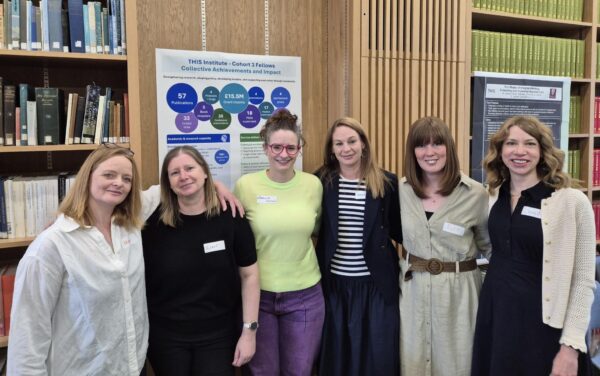
With a total of 57 publications, this cohort received 65+ invitations to deliver talks or conference presentations on their fellowship projects. They further contributed to three book chapters, four podcasts and blogs and have amassed a total of £15.5 million in grant funding among them.
Collectively this cohort supervised 18 PhD students and 17 Masters students and examined seven PhDs. They also took on senior and advisory roles, with some fellows joining national boards, committees and programmes. Out of the cohort, four fellows gained promotions, some of which were to permanent posts.
Research from this cohort has helped to shape the NHS 10-year cancer plan, influence the national screening programme and the NHS inequalities reviews, and fellows advised on national audit and improvement programmes and clinical guidance in dentistry. Project outputs from the cohort have been used to help deliver national and international workshops, with fellows teaching and delivering large scale webinars (in one case to over 1,500 people). They created resources as part of their projects which have been used across NHS trusts and health boards, with national organisations sharing and hosting outputs, and one fellow also established a 100-member PPI group.
Despite professional and personal challenges, this cohort’s achievements – both individually and collectively – have gone on to shape them as leaders in the field of healthcare improvement.