
Register your interest in joining our Voice and Insight Panel, a diverse group of people who help guide and inform our research.
Putting people at the heart of our work is central to our mission.
By collaborating with patients and people working across healthcare, we co-create the high-quality, actionable evidence base that’s needed to support healthcare innovation and improvement.
Today’s research is tomorrow’s care. This reality captures the need for authentic public and patient involvement – programmes and research co-developed with us, not done or delivered to us. Too often in healthcare our role is seen as ornamental at best, despite organisations declaring intentions around partnership, collaboration and co-production.
I’m proud that people who have co-produced research with THIS feel a sense of shared ownership, because THIS works directly with patients and the public to shape tomorrow’s care for the better.

Stella O’Brien
Chair, Engagement and Involvement Advisory Committee, THIS Institute
Healthcare improvement research must always be a fully inclusive team sport, ensuring that patients, families, carers and health and care staff are all centrally involved in the design, delivery and dissemination of studies.
Only if this happens will it be possible for the real prize to be won – implementation of new forms of health service delivery and organisation and that can assure safe, high-quality, equitable and appropriate care for those who need it most.

Judith Smith
Chair, Scientific Advisory Committee, THIS Institute
How people are placed at the heart of our work
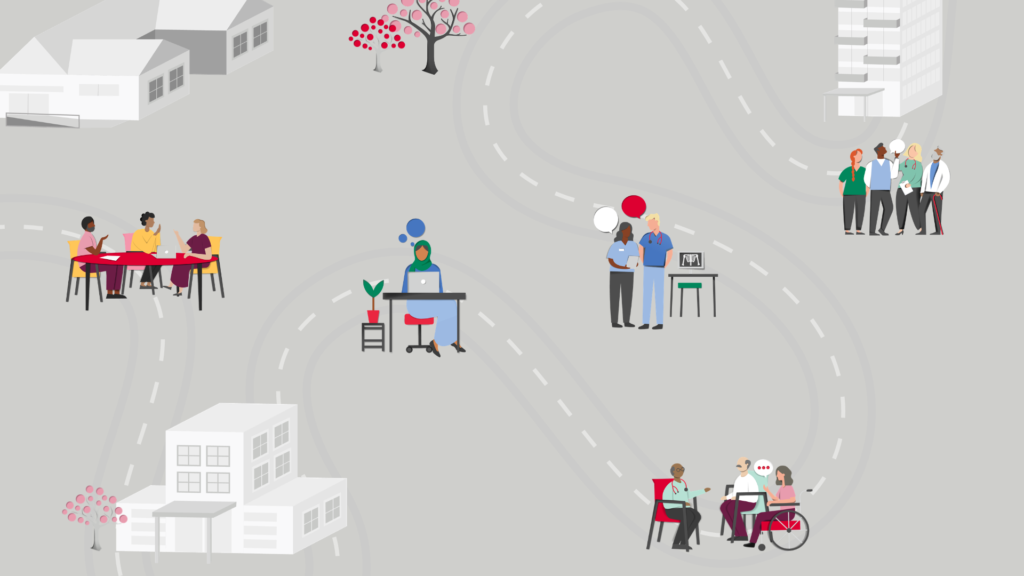
Planning and funding
Helping to develop research proposals and bids and reviewing proposals before submission.
Research design
Advising on scope, feasibility, ethics, and accessibility.
Recruitment
Advising on recruitment routes, cultural issues, and helping to develop participant information materials.
Data collection and analysis
Contributing to data collection, management, analysis, and interpretation, and helping to co-develop findings and recommendations.
Dissemination
Supporting the release of new research, helping to find the right dissemination channels and methods.

Uniting lived experience with clinical expertise
Identify the top 10 priorities for sepsis research
Sepsis causes over 45,000 deaths annually in the UK. People who survive an admission to critical care from sepsis can face a challenging recovery.
We reached out to over 1,500 sepsis survivors, carers, and clinicians, who collaborated with us and the charity Sepsis Research (FEAT) to carry out a James Lind Alliance research priority setting partnership to help decide which were the most important unanswered research questions about sepsis. Participants described the process as “valuable, insightful and inclusive.”
We worked hard to make sure anyone with experience could take part, and together, we reviewed almost 1,000 questions and narrowed them down to the ten most urgent priorities for future research.
Reena Mehta, consultant pharmacist at King’s College Hospital, London, said, “The most important takeaway is that by working together, we can develop solutions that impact us all and advance future treatments and diagnosis.”
By bringing together lived experience with clinical expertise and making sure that the perspectives reflected the full diversity of the sepsis community, the team at THIS Institute and Sepsis Research (FEAT) worked with the James Lind Alliance to make sure that future research focuses on what really matters to those most affected by sepsis.
Embedding lived experience to strengthen communication in maternity services
Working with a diverse group of people with lived experiences of maternity care has been invaluable. It’s not only made the research better and more aligned with the needs of women and their birth partners but also touched me personally: their dedication to maternity improvement shows what we can achieve when we work together.
Drawing on the insight and experiences of the diverse patient and public involvement panel has shaped every stage of our maternity work. Together we have ensured that communication principles and the resources developed were genuinely inclusive and relevant. The national rollout of the Avoiding Brain Injury in Childbirth programme highlights what can be achieved when lived and professional experience is embedded throughout healthcare improvement efforts.

Jan van der Scheer
Assistant Research Professor
Working with Patient Safety Specialists to evaluate new roles
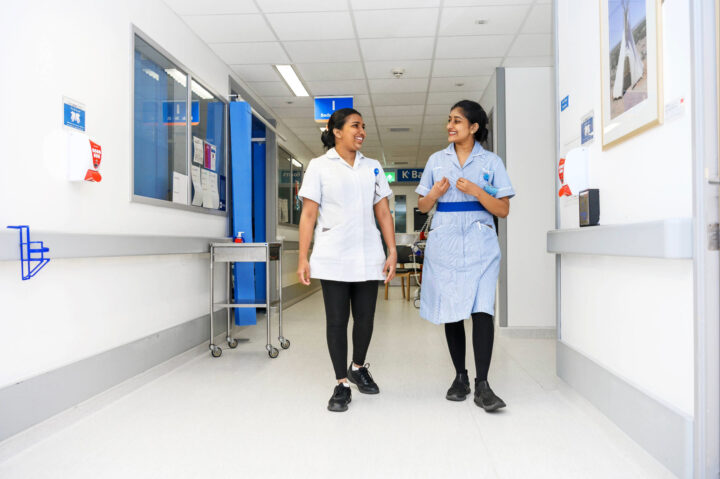
In 2019, patient safety specialists were introduced across all NHS organisations in England as part of the NHS Patient Safety Strategy. The role leads and oversees improvements to the quality and safety of patient care. We collaborated with patient safety specialists, NHS England, and other national stakeholders to evaluate this new role.
Patient safety specialists shared their views about the role, the challenges they faced, and how they felt the role fitted within their organisation, through a national survey and during one-to-one interviews and focus groups.
Our study advisory group, which included patient safety specialists, policymakers, clinicians, service users, and others informed the study design, recruitment, and analysis, and helped us to interpret the data at various stages. The group also helped us to ensure that our analysis was grounded in understanding day-to-day organisational practice and of NHS policy.
“It was refreshing to be invited to participate in the evaluation of the patient safety specialist role and to be truly listened to, with my perspective and feedback being incorporated into the findings and conclusions. Reading the findings I could see where the views of patient safety specialists like myself had been heard and can really shape future support to the patient safety specialist role and make a difference for our patients and staff.” Rosie Connolly, System Quality Director and ICB Patient Safety Specialist at Hertfordshire and West Essex ICB.
“Having patient safety specialists involved from the start to the end of our evaluation including in our study group ensured we asked about the right things in the right way, allowed us to engage with role-holders across England during data collection and helped us to generate findings that were relevant to patient safety specialists and their organisations.” Robert Pralat, Research Associate, THIS Institute.
Working with people with lived experiences to help us reflect what matters most
We collaborated with the McPin Foundation and worked with a Lived Experience Advisory Panel (LEAP) on a project which evaluated a trial within NHS Talking Therapies. The aim of the trial was to improve support for people with psychotic experiences and common mental health difficulties.
Panel members were involved throughout the research. They took part in co-analysis sessions, where they helped us make sense of interview transcripts and shared their own perspectives.
Working with panel members helped us to make sure that our analysis reflected what mattered most to people with lived experience and strengthened the quality and depth of our findings.
The panel also helped us sense-check our results and think carefully about what they mean in real life for people with mental health conditions. Through these discussions, we developed a set of recommendations for future services, which will be included in our research outputs.

Rosie Lindsay
Research Associate
Collaborating with patients and healthcare staff
Developing quality measures for perioperative care
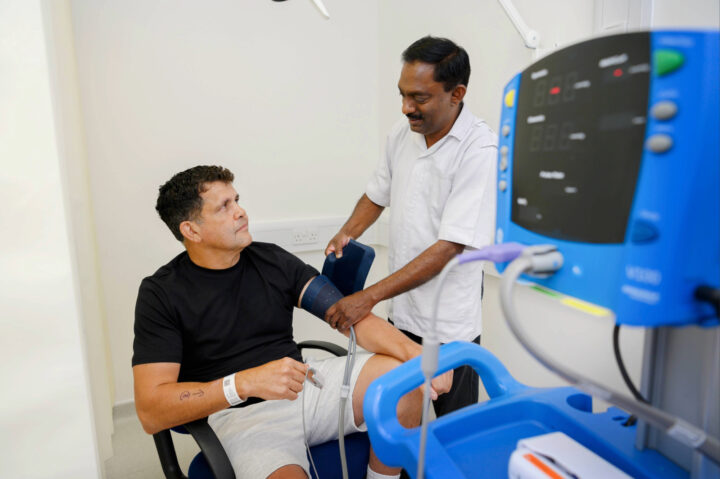
Almost 10 million people in the UK have surgery every year. A patient’s perioperative journey starts from the first consideration of surgery through to their recovery. Although hundreds of quality indicators already existed, it wasn’t possible to measure them all routinely, and many of them had been developed without input from patients and healthcare staff.
We asked over 200 patients, 55 healthcare professionals, and 17 members of our study advisory group to help us develop an evidence-based set of indicators to monitor how care is organised (structures) and delivered (processes) to deliver high-quality perioperative care. “Patients, their carers, and staff are the primary stakeholders in perioperative care, as recipients and providers, respectively,” said Kristina Wanyonyi-Kay, Assistant Research Professor, THIS Institute. “They engage with quality metrics in different ways, and so it’s very important that our quality framework and indicators represent their lived experiences.”
These experiences were essential to creating a framework and indicators that could be used to evaluate and measure the quality of care that a patient receives – and to help ensure the best care for everyone before, during and after surgery.