


Clear, practical microlearning resources on values and ethics in healthcare improvement. Includes essential terms and ethical issues, planning questions, and top tips to support improvement efforts.
Explain THIS: Values and Ethics

Navigate sections
Introduction
This resource offers clear, practical guidance on values and ethics in healthcare improvement.
After reading this resource, you should be able to :
- Explain essential terms around values and ethics in healthcare improvement
- Describe ethical issues and approaches that can be used in healthcare improvement efforts.
The resource also includes practical questions to:
- Help plan an improvement effort
- Support reflection on what makes healthcare good
- Support reflection on what makes improvement processes good and right.
Whether you’re starting a new improvement initiative or looking to expand and sustain existing work, this guide provides actionable advice to support your efforts.
Definitions
Ethics involves thinking carefully about values and deciding what is good, right, and justified – and why.
Values and ethical issues pervade healthcare improvement efforts, but they are not always recognised or given the attention they need. Considering ethics is a key part of healthcare improvement. It helps ensure that efforts align with values like fairness, respect, and minimising harm.
Improvement ethics
Improvement ethics focuses on the values, beliefs, and ethical considerations involved in healthcare improvement. It involves thinking about the trade-offs and value judgments that impact decisions about which goals to pursue, and which approaches to use in the improvement process.
Implicit normativity
Decisions in healthcare improvement efforts are often made based on unstated assumptions about what is good or right, and what would be better. The presence of these assumptions is known as implicit normativity. If assumptions are not identified or examined, then important values, like equity and person-centred care, can be overlooked.
Ethical analysis
Ethical analysis begins with asking and debating key questions, including whether, and to what extent, we are:
- treating people in acceptable ways
- bringing about as much good as we can
- working in ways that embody ‘virtues’ (ideal or valuable character traits or qualities)
- supported by social structures and cultures that support these good actions and virtues.
Many theories and approaches can help you think through these questions.
Ethical issues and approaches
Healthcare improvement efforts can lead to positive change. But they can also fail or unintentionally cause harm. This is one reason why thinking about improvement ethics is important.
No improvement approach is ethically neutral, and different approaches are not ethically equivalent. Every approach reflects certain values and priorities, while giving less attention to others. Even approaches that are defined or characterised in ethical terms (e.g. they include reference to fairness, collaboration, inclusion) are not necessarily unproblematic or appropriate in practice. Below we look at ethical issues linked to two common improvement approaches.
Ethical issues around collaboration-based approaches
Collaboration-based improvement involves learning from others and sometimes coordinating activity, often across institutions or geographic areas. Formal collaboratives with specific goals or more informal groups called communities of practice are examples of this type of approach, which aims to harness collective knowledge, increase innovation, and improve outcomes by working together.
Collaboration-based approaches encourage mutual respect and shared decision-making. However, they can raise ethical challenges:
- How do we ensure that power imbalances don’t undermine collaboration?
- Are we genuinely listening to all voices?
Ethical issues around co-production and co-design
Co-production involves patients (or service users) working alongside healthcare providers to create, deliver, and improve services. Co-design focuses on collaboratively designing healthcare services that reflect patient needs and experiences.
These approaches are built on values of inclusion, equality, and democracy. Ethical considerations include:
- Not all patients are equally able or willing to participate in co-production (for example, due to health literacy or accessibility issues). How can we ensure inclusivity and fairness in these processes?
- Co-production involves sharing accountability. How can we navigate this shared responsibility while maintaining professional and legal obligations to patients?
Six top tips for improvement ethics
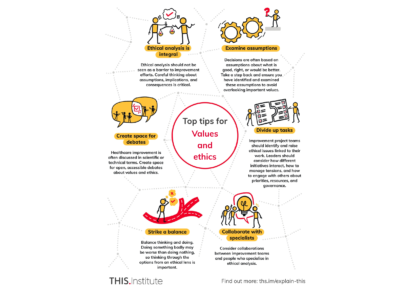
Six top tips for improvement ethics – text-only version
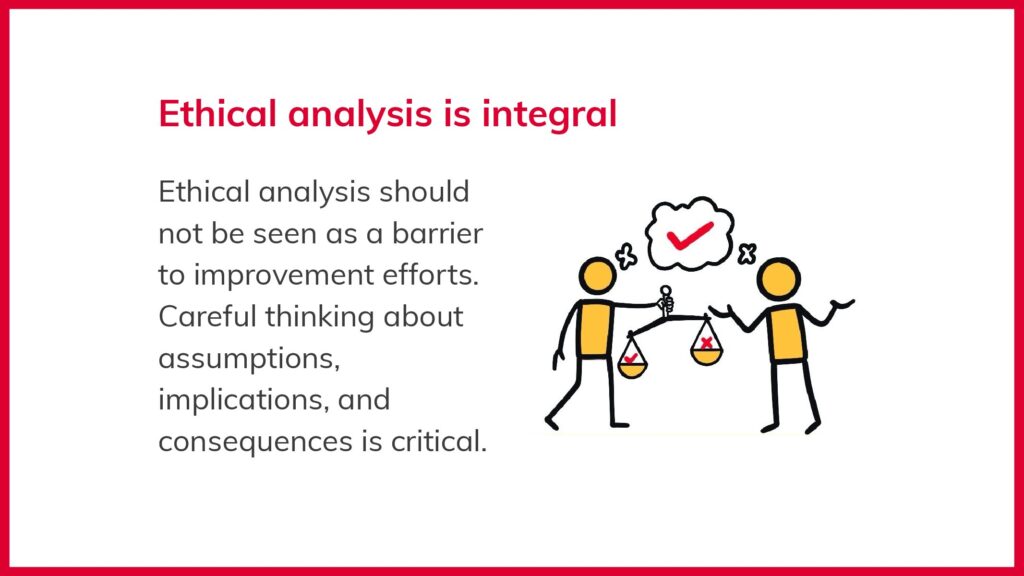
- Ethical analysis is integral: Ethical analysis should not be seen as a barrier to improvement efforts. Careful thinking about assumptions, implications, and consequences is critical.
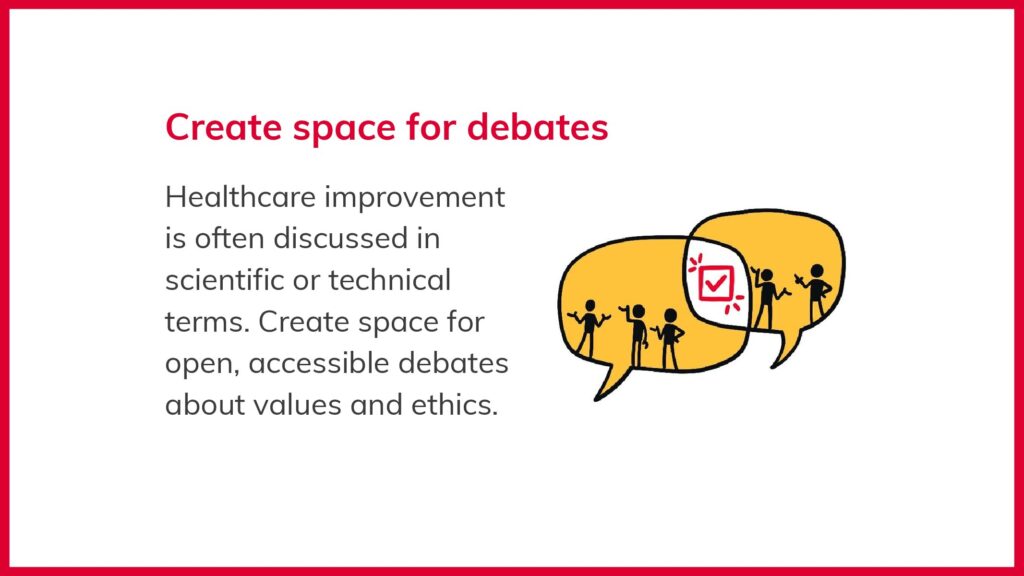
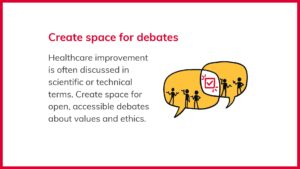
- Create space for debates: Healthcare improvement is often discussed in scientific or technical terms. Create space for open, accessible debates about values and ethics.
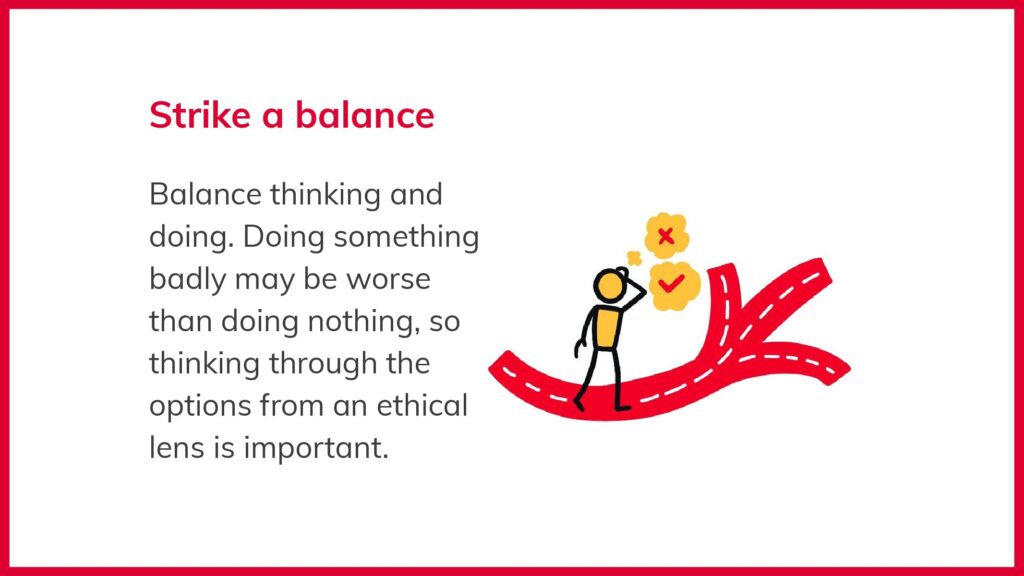
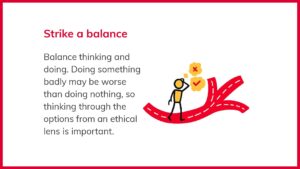
- Strike a balance: Balance thinking and doing. Doing something badly may be worse than doing nothing, so thinking through the options from an ethical lens is important.
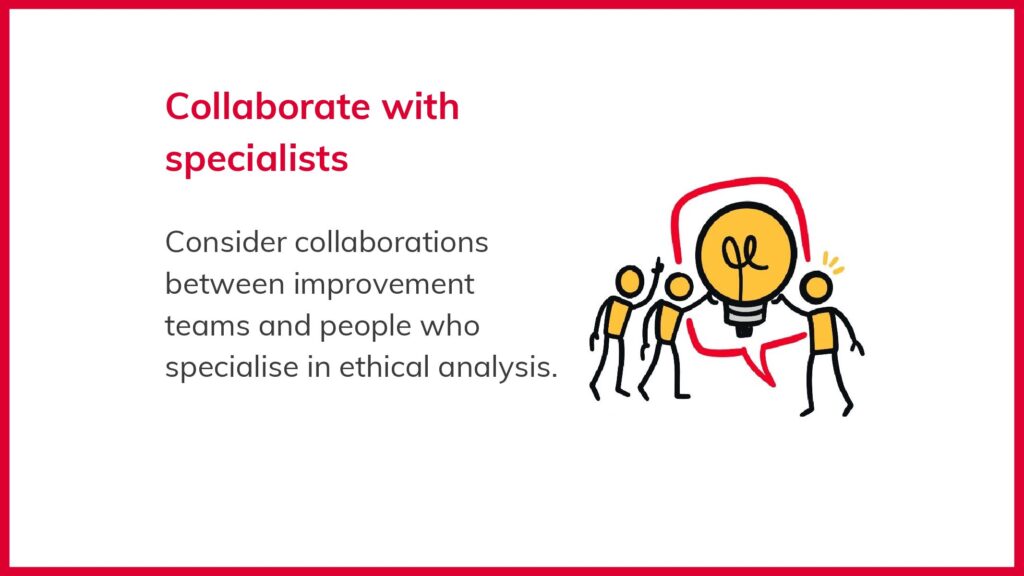
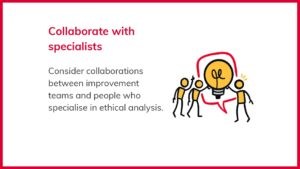
- Collaborate with specialists: Consider collaborations between improvement teams and people who specialise in ethical analysis.
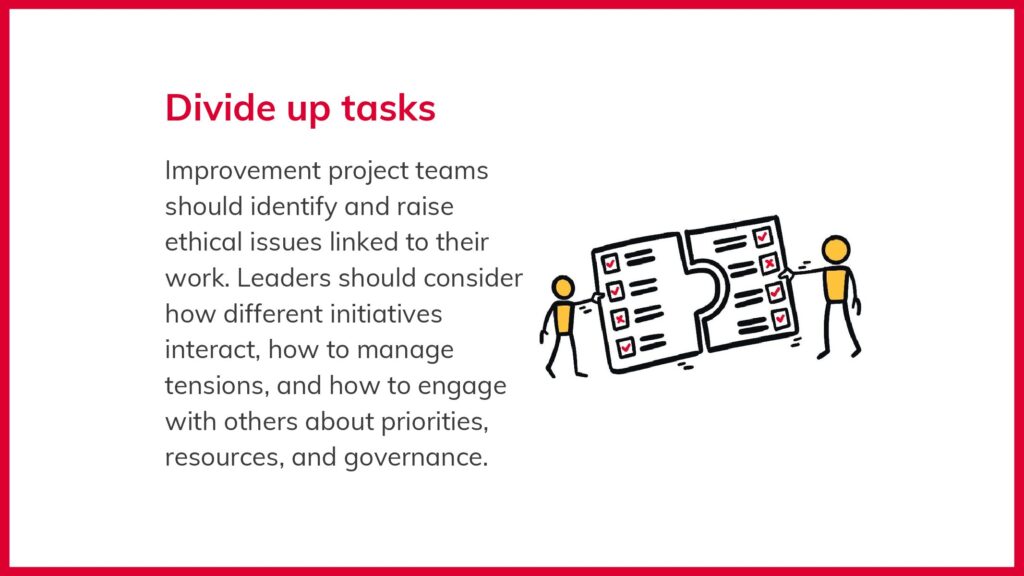
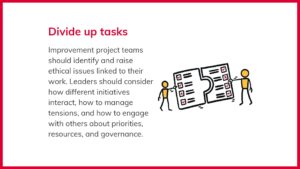
- Divide up tasks: Improvement project teams should identify and raise ethical issues linked to their work. Leaders should consider how different initiatives interact, how to manage tensions, and how to engage with others about priorities, resources, and governance.
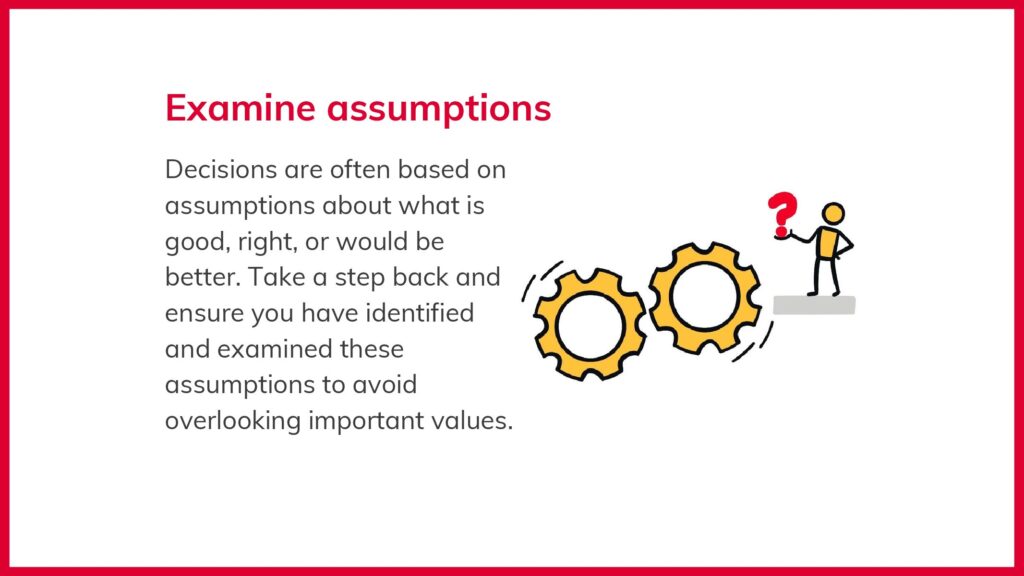
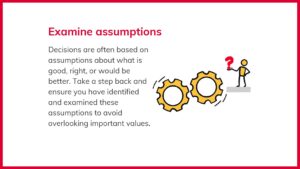
- Examine assumptions: Decisions are often based on assumptions about what is good, right, or would be better. Take a step back and ensure you have identified and examined these assumptions to avoid overlooking important values.
Practical questions
Questions to help plan an improvement activity
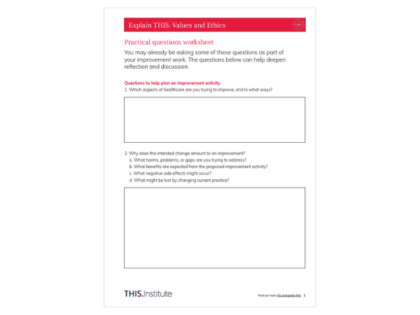
- Which aspects of healthcare are you trying to improve, and in what ways?
- Why does the intended change amount to an improvement?
- What harms, problems, or gaps are you trying to address?
- What benefits are expected from the proposed improvement activity?
- What negative side effects might occur?
- What might be lost by changing current practice?
- What improvement interventions and approaches are being proposed, and why?
- Do they create new duties or responsibilities, and for whom?
- Do they involve penalties for non-compliance or rewards for compliance?
- Who carries the responsibilities, burdens, and costs of the interventions and approaches?
- Who will benefit from the intervention?
- Is the implementation costly or resource intensive, and have these costs been carefully considered?
Practical questions
Questions to support reflection on what makes healthcare good
- Whose vision and priorities shape how the problem and aims of improvement are defined?
- Whose perspectives may be missing or less well reflected?
- Why do the targeted areas of healthcare matter, and to whom?
- Do the intended changes reflect people’s lived experiences and what matters to them?
- Who is most affected by the targeted problems, and who is likely to benefit most and least from the improvement? Who might be adversely affected?
- How have health inequalities been considered?
- Does the intended improvement go beyond what is most easily measurable? Does it include more qualitative considerations of what matters for good healthcare?
- What tensions arise in defining the success of the improvement activity? For example, between:
- different aspects of quality or different kinds of better in healthcare
- the needs of and potential benefits to different groups of people
- actions and effects at different levels in the healthcare system.
- Will professional roles or identities change?
- Are the cultures of healthcare provision, and the virtues of healthcare practitioners, strengthened or undermined?
- How does the improvement support good (including more equal) relationships and ongoing sharing of learning?
Practical questions
Questions to support reflection on what makes improvement processes good and right
- Are the processes for setting aims, defining and prioritising the problem and the improvement, and evaluating results well justified?
- Are they respectful, fair, inclusive, and do they consider diversity?
- Do they arise from or enable collaborative or partnership working?
- What kinds of dialogues do they involve?
- How are any divergences, tensions, or conflicts handled?
- What value judgements are built into the methods and models used, the indicators or measures of improvement, and the construction of the evidence base? Whose perspectives and values shape:
- the design of the intervention and approach
- the choice of measures of improvement
- how success is evaluated?
- Who are the people working on improvement accountable to, and how? How does that matter?
Further reading
THIS Institute | Alan Cribb, Vikki Entwistle, and Polly Mitchell
Values and Ethics
https://doi.org/10.1017/9781009325233
BMJ Open Quality
Ethical considerations in quality improvement: key questions and a practical guide
https://bmjopenquality.bmj.com/content/10/3/e001497
Healthcare Quality Improvement Partnership
Guide to managing ethical issues in quality improvement or clinical audit projects
https://www.hqip.org.uk/wp-content/uploads/2017/02/guide-to-managing-ethical-issues-in-quality-improvement-or-clinical-audit-projects.pdf
Annals of Internal Medicine
The Ethics of Using Quality Improvement Methods in Healthcare
https://qi.elft.nhs.uk/wp-content/uploads/2017/02/Ethics-of-QI.pdf
Acknowledgements
This resource was adapted from Values and Ethics, by Alan Cribb, Vikki Entwistle, and Polly Mitchell, part of THIS Institute’s series ‘Elements of Improving Quality and Safety in Healthcare’.
Thank you to Sue Hunter, Royal Free London NHS Foundation Trust, for her insightful comments and recommendations.
Download the resources

Worksheet
You can download the practical questions as a printable worksheet, with space to note down your responses.

Explore more microlearning resources
Explain THIS: Measurement for Improvement
Read more
Explain THIS: Making Culture Change Happen
Read more
Explain THIS: Collaboration-Based Approaches
Read more
Explain THIS: Governance and Leadership
Read more
Explain THIS: Implementation Science
Read more
Explain THIS: Spread, Scale-Up, and Sustainability
Read more