



Clear, practical microlearning resources on measurement for healthcare improvement. Includes key approaches, planning questions, and top tips to support improvement efforts.
Explain THIS: Measurement for Improvement

Navigate sections
Introduction
This resource offers clear, practical guidance on measurement for healthcare improvement.
After reading this resource, you should be able to:
- Understand key terms around measurement and data
- Describe structural, process, and outcome measures
- Explain the types of data that can be collected to measure healthcare improvement efforts.
The resource also includes practical questions to guide planning, alongside links to further reading for deeper insights.
Whether you’re starting a new improvement initiative or looking to expand and sustain existing work, this guide provides actionable advice to support your efforts.
Definitions
Measurement is an essential part of improving healthcare. It helps teams understand whether they are making progress towards their goals, where changes are needed, and whether those changes are actually working.
There’s no single perfect way to measure healthcare improvement. Healthcare is complex and quality can mean different things to different people. Efforts to make change can have both positive and unintended effects. Numbers alone rarely tell the full story, so combining data with people’s experiences and perspectives can often help clarify whether any improvement is real or why challenges persist.
Data
Data refers to the information relevant to improvement, which may be quantitative (measured) or qualitative (collected through non-numerical methods).
Quantitative data
Quantitative data provides numerical insight, such as the amount of time a procedure takes, rates of medication errors, or patient satisfaction scores.
Qualitative data
Qualitative data, gained through methods such as observations, focus groups or interviews, can give different insights – particularly from the perspective of those involved in a change initiative.
Measurement
Measurement is the process of using data in a meaningful way to track progress, identify patterns, and drive decisions.
Types of measures
Measurement for improvement can focus on structures, processes, or outcomes.
Structural measures
Structural measures assess the settings in which care happens, such as staffing levels, availability of equipment or technology, or buildings and facilities.
Advantages
- Relatively easy to measure and understand.
- Capture aspects of care that have the potential to affect multiple processes and outcomes.
Disadvantages
- Can lack detail.
- Often hard to change.
- Relationships between structure and outcomes not always clear.
Process measures
Process measures capture the actions and processes involved in delivering care, such as decision-making, teamwork, and adherence to guidelines.
Advantages
- Directly measure the care patients receive.
- Can detect quality problems before poor outcomes become apparent.
- Directly suggest targets for improvement.
Disadvantages
- May be multiple processes that are hard to link to measures.
- Not always meaningful for patients or decision-makers.
Outcome measures
Outcome measures assess the effects of care on the health status of patients and populations, such as mortality and improved patient experience.
Advantages
- Meaningful to patients, providers, and decision-makers.
- Capture the ultimate goal of improvement efforts.
Disadvantages
- Multiple factors influence outcomes.
- Adjustment for casemix (the mix of patient characteristics and conditions that can influence outcomes) can be difficult.
Balancing measures
Balancing measures are essential to detecting any potential unwanted consequences, making sure that improvements in one area don’t cause problems elsewhere.
Types of data
Healthcare improvement efforts can draw on many different sources of data, including:
- Administrative data, such as diagnostic codes used to record hospital admissions and procedures.
- Data warehouses, which bring together information from multiple parts of the healthcare system in one comprehensive database – including medical records, staffing assignments, supply chain, and financial data.
- Patient registries and national clinical audits, containing information on patients who have a particular disease or condition.
- Chart reviews, where information is taken directly from patient records.
- Key performance indicators, used to track important areas of performance.
- Patient and staff surveys, used to measure patient and staff experience and satisfaction.
- Publicly available patient feedback, including comments shared on social media and websites.
Using multiple data sources can help teams understand the nature and scope of quality problems, and what might be causing them. Presenting or visualising data in ways that will engage team members is also important.
Whatever types of data are involved, they should help answer three key questions about the improvement intervention:
- Was it tested or implemented successfully?
- Did it achieve what it was meant to?
- Did it create any new or unexpected problems?
Six top tips for measurement for improvement
Six top tips for measurement for improvement – text-only version
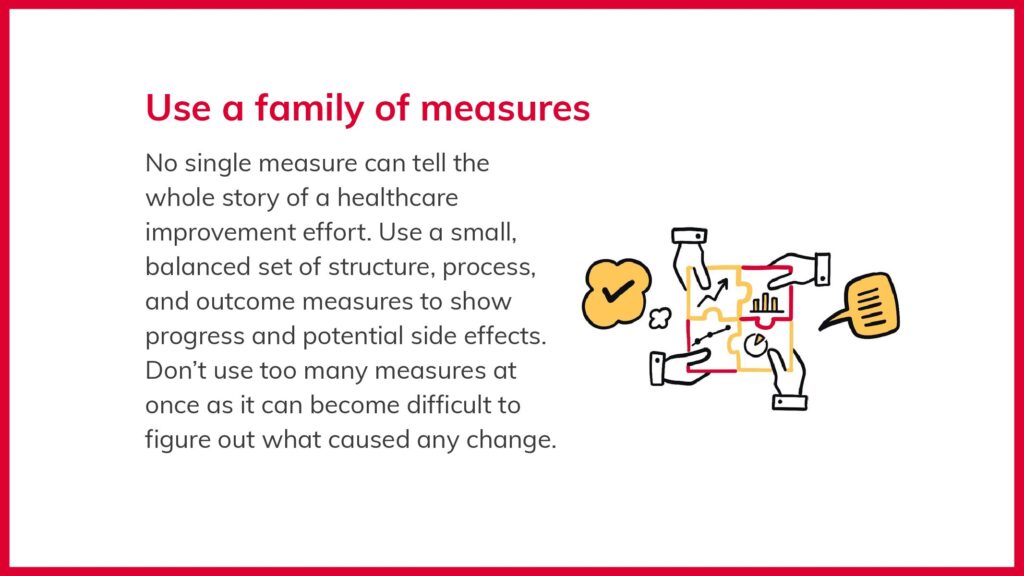
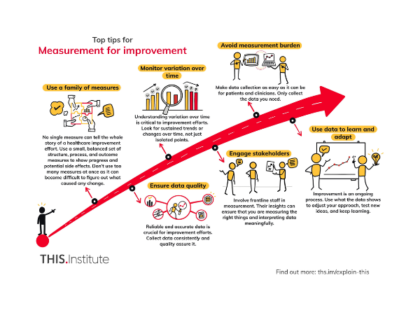
- Use a family of measures: No single measure can tell the whole story of a healthcare improvement effort. Use a small, balanced set of structure, process, and outcome measures to show progress and potential side effects. Don’t use too many measures at once as it can become difficult to figure out what caused any change.
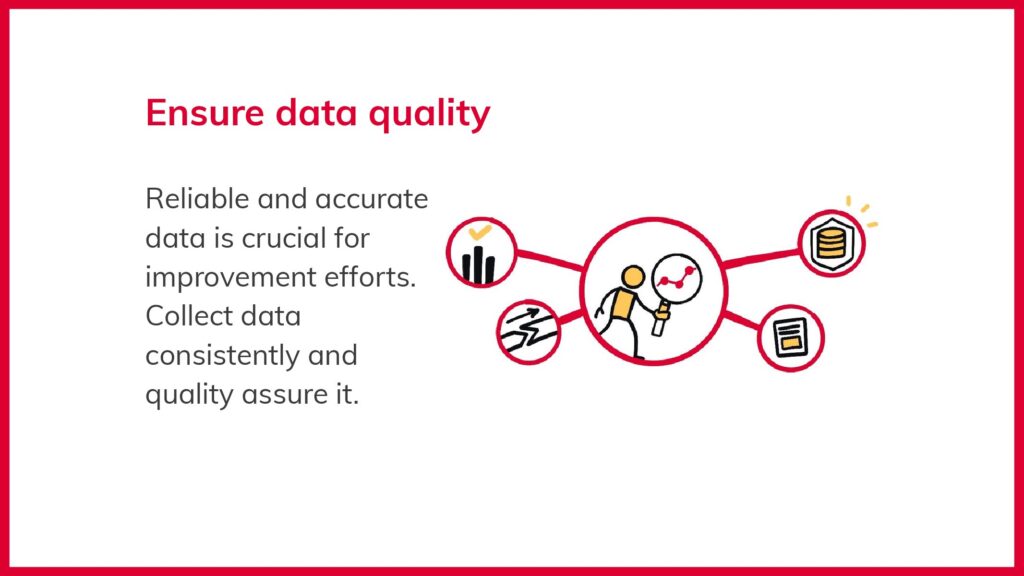
- Ensure data quality: Reliable and accurate data is crucial for improvement efforts. Collect data consistently and quality assure it.
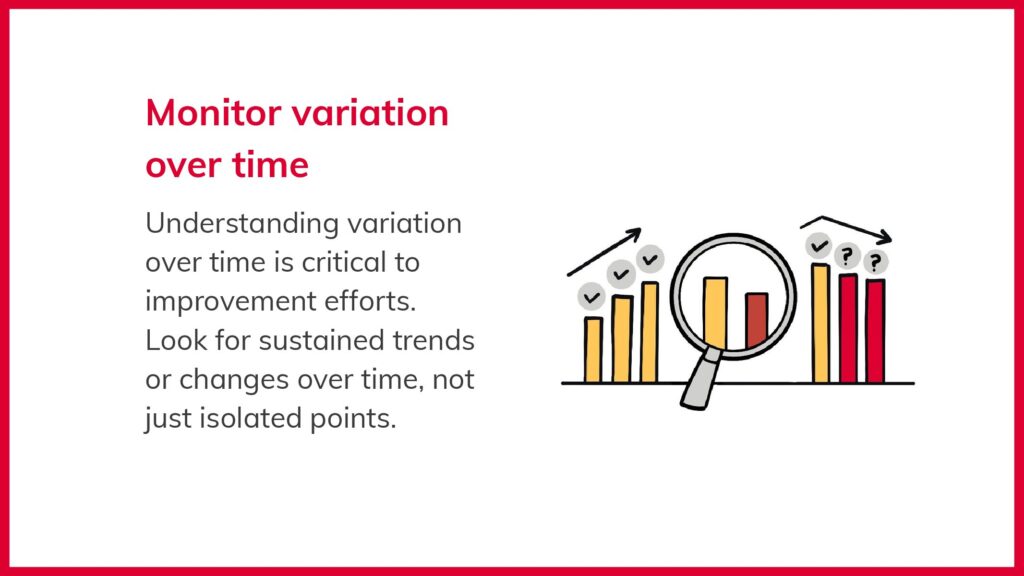
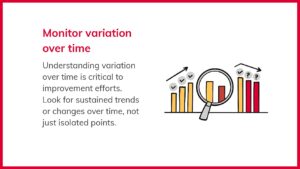
- Monitor variation over time: Understanding variation over time is critical to improvement efforts. Look for sustained trends or changes over time, not just isolated points.
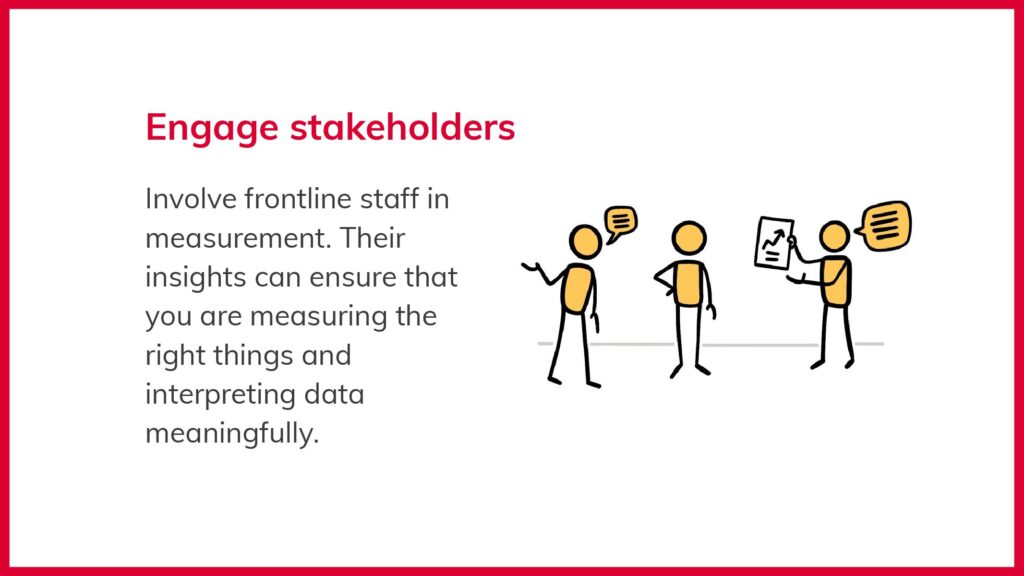
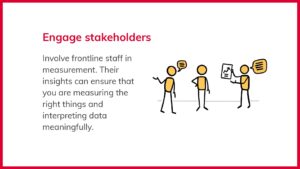
- Engage stakeholders: Involve frontline staff in measurement. Their insights can ensure that you are measuring the right things and interpreting data meaningfully.
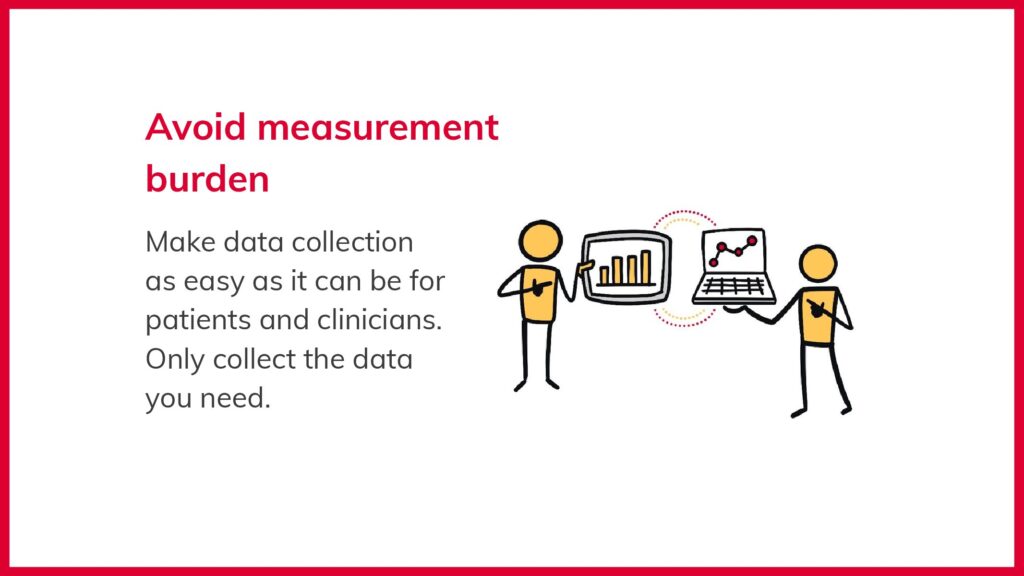
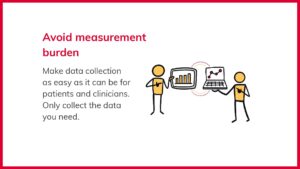
- Avoid measurement burden: Make data collection as easy as it can be for patients and clinicians. Only collect the data you need.
- Use data to learn and adapt: Improvement is an ongoing process. Use what the data shows to adjust your approach, test new ideas, and keep learning.
Practical questions
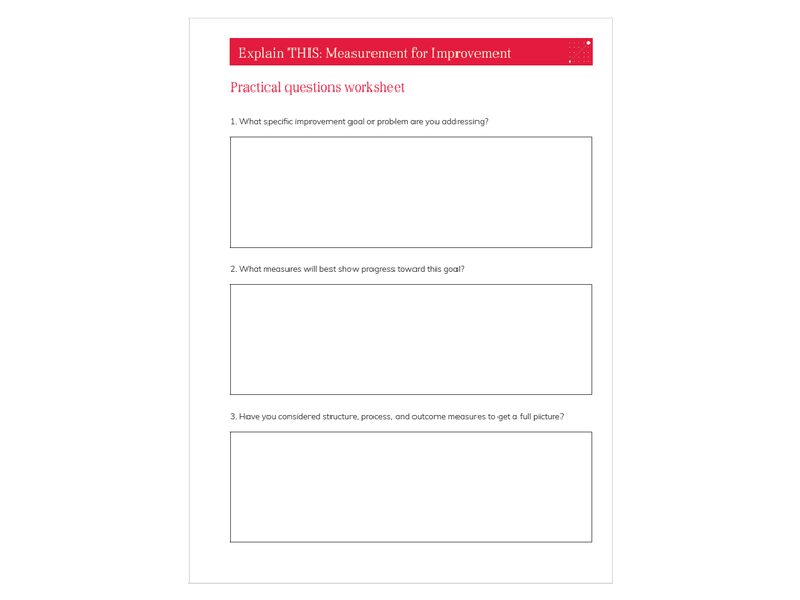
- What specific improvement goal or problem you are addressing?
- What measures will best show progress toward this goal?
- Have you considered structure, process, and outcome measures to get a full picture?
- Is there any existing data you can use?
- How will you prevent bias in your sampling and data?
- What is the starting point or baseline for your measurements?
- Is the period of time you’re using the right length to accurately reflect what you want to measure?
- How will you collect and analyse data consistently and reliably?
- How will you assess whether changes are having the desired effect?
- How will you engage frontline staff in the measurement process?
- Are you collecting only the amount of data needed?
- How will you present the data? Can you use visualisation techniques, such as charts, graphs, or diagrams?
- What will you do if the data shows no improvement?
- What will you do if unwanted effects show up?
- How will you assess whether the improvement can be sustained over time?
Further reading
THIS Institute | Alene Toulany and Kaveh G. Shojania
Measurement for Improvement
https://doi.org/10.1017/9781009326063
NHS Institute for Innovation and Improvement
Improvement Leaders’ Guide
https://www.england.nhs.uk/improvement-hub/wp-content/uploads/sites/44/2017/11/ILG-2.1-Measuring-for-Improvement.pdf
NHS Elect
Measurement for Improvement Online Course
https://www.nhselect.nhs.uk/online_training_courses_detail.aspx?sectionID=42
THIS Institute | Mohammed A Mohammed
Statistical Process Control
https://doi.org/10.1017/9781009326834
NHS Institute for Innovation and Improvement
The How-to guide for measurement for improvement
https://www.england.nhs.uk/improvement-hub/wp-content/uploads/sites/44/2017/11/How-to-Guide-for-Measurement-for-Improvement.pdf
Acknowledgements
This resource was adapted from Measurement for Improvement, by Alene Toulany and Kaveh G. Shojania, part of THIS Institute’s series ‘Elements of Improving Quality and Safety in Healthcare’.
Thank you to Lorraine Armstrong, University of Stirling, for her insightful comments and recommendations.
Download the resources
Worksheet
You can download the practical questions as a printable worksheet, with space to note down your responses.
Sketchnote
Download the sketchnote, featuring six top tips for measurement for improvement.

Explore more microlearning resources

Explain THIS: Values and Ethics
Read more

Explain THIS: Making Culture Change Happen
Read more

Explain THIS: Collaboration-Based Approaches
Read more
Explain THIS: Governance and Leadership
Read more
Explain THIS: Implementation Science
Read more

Explain THIS: Spread, Scale-Up, and Sustainability
Read more