
Free microlearning resources to help inform practical, achievable strategies for engaging clinicians in the adoption of new technologies and innovations.
Explain THIS: Engaging clinicians in adopting new technologies and innovations

Navigate sections
About this resource
Introducing and implementing anything that impacts clinical work requires engagement with the clinicians who will ultimately use it. That’s not always straightforward.
This resource summarises how current evidence might be used to inform practical, achievable strategies for clinician engagement in the adoption of new technologies and innovations. Aimed at anyone involved in organising the deployment of new technologies and innovations at their trust or practice, including clinical leads, managers, and project teams, it contains focused questions to guide planning alongside links to further reading for deeper insights.
Whether you’re starting a new improvement initiative or looking to expand and sustain existing work, this guide provides actionable advice to support your efforts.
End-to-end involvement
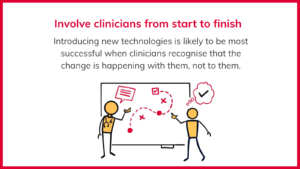
Involve clinicians from start to finish
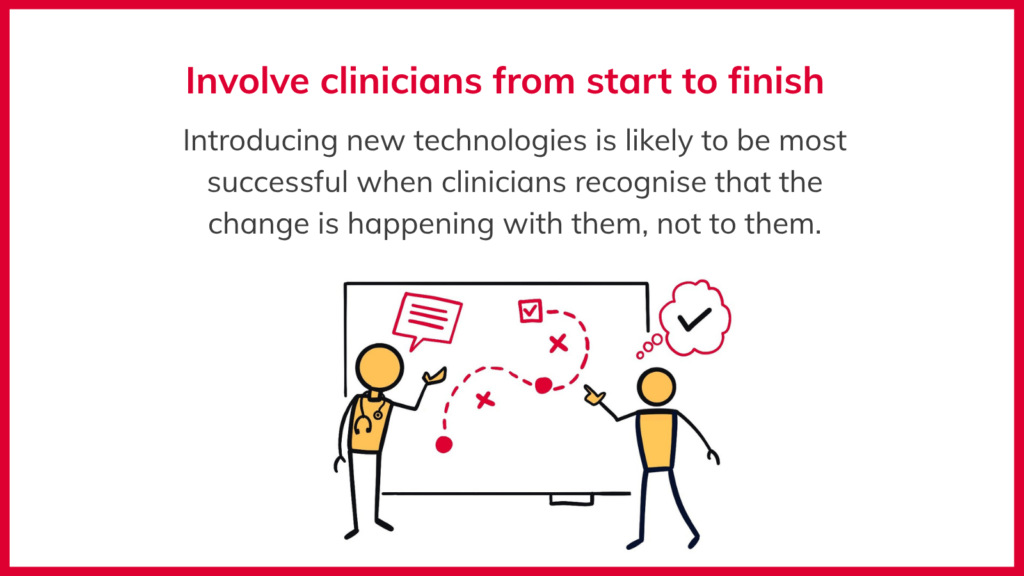
Introducing new technologies or innovations is most likely to be successful when clinicians feel that the change is happening with them, not to them.
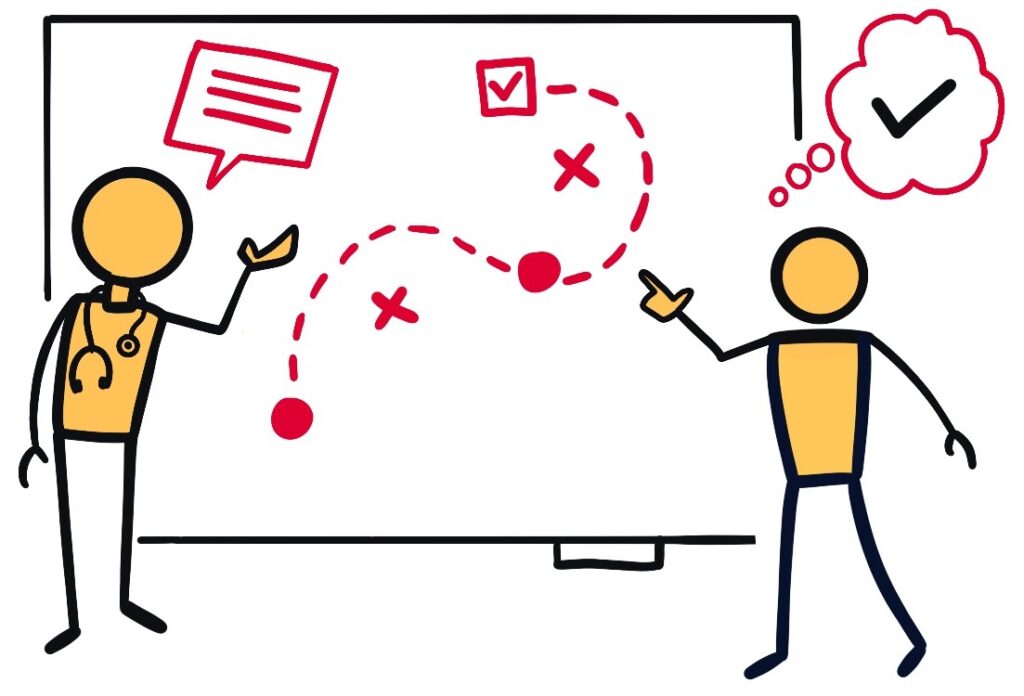
- For change to stick, clinicians need to be involved from the very beginning of the rollout, and all the way through. That means bringing clinicians into the planning, design, testing, implementation, and post‑implementation review of the rollout. The level of involvement can vary, from broad consultation with all staff to deeper collaboration with a smaller, representative group.
- Involve clinicians as “co‑architects of change”, creating opportunities to co‑design and co‑evaluate the intervention where possible. When people understand that they’ve helped build or shape something, they’re more likely to support it. Practical steps could involve asking clinicians to outline “pain points” and where improvements could be made.
- Build a “feedback-hungry culture” by routinely asking for input, listening carefully, and showing openness to iteration – and showing what’s been done in response. This provides clinicians with shared ownership, which can help drive engagement, productivity, and satisfaction.
Education and training
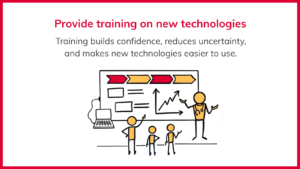
Provide training on how the technology works and how it can be used
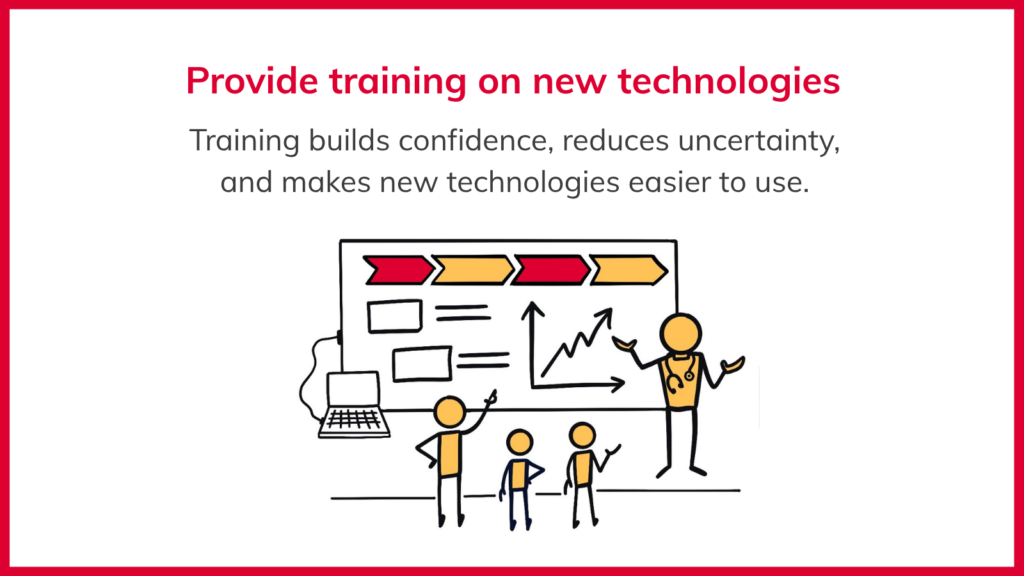
For any new technology or innovation to become part of everyday clinical practice, people need to understand it. Learning opportunities can help build confidence, reduce uncertainty, and make new tools usable rather than intimidating.

- Offer clear, accessible explanations of how it works and what clinicians can reasonably expect from it. This isn’t about technical deep‑dives – it’s about offering enough transparency and evidence to help build trust, acceptance, and confidence.
- Provide education and training to clinicians on how to use the technology or innovation in their day‑to‑day work, using real-world settings and examples.
- Everyone learns differently, so consider a range of learning formats: short courses, case studies, written guides, videos, on‑ward demonstrations, or peer‑led sessions. The more flexible and accessible the learning opportunities, the more likely we are to increase clinician engagement.
- Learning resources need to fit around busy clinical schedules. This means offering them in a variety of formats: in‑person, virtual, and on demand.
- It’s helpful to show, not just tell. Using real case studies and proof points can highlight tangible benefits, whether that’s smoother workflows, increased efficiency, less time spent on documentation, or more meaningful interaction with patients. Don’t be afraid of identifying the pitfalls and challenges either (and encouraging clinicians to share theirs) – it will demonstrate authenticity and avoid a “hard sell” feel.
- Training is not a one-and-done exercise. Ongoing training and support are key, including regular refreshers and clearly signposted points of contact for troubleshooting or questions.
Change champions
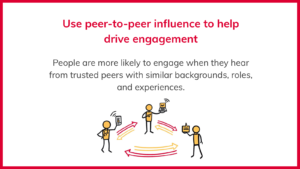
Use peer-to-peer influence to help drive engagement
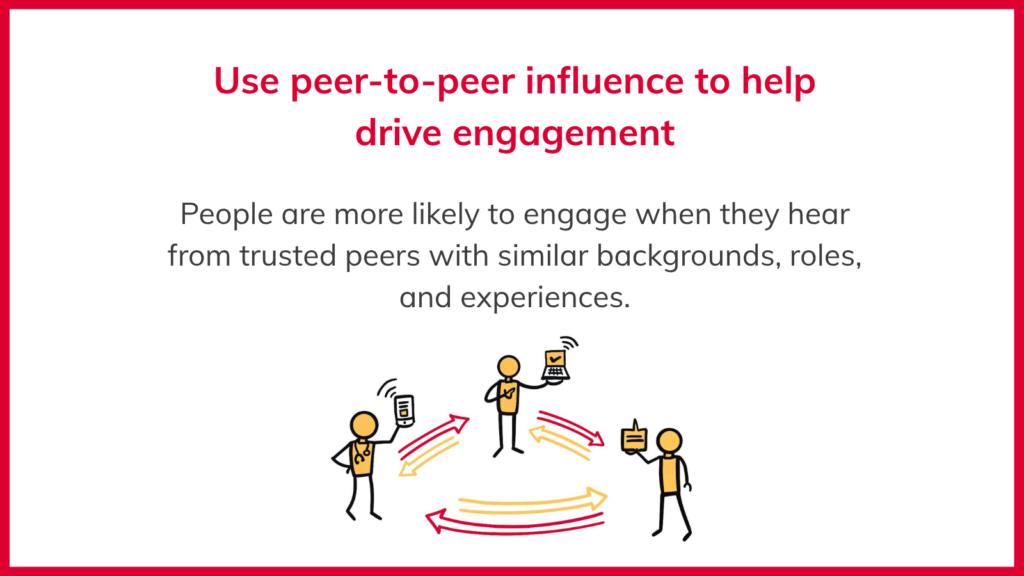
Evidence shows that people are more likely to listen to and be influenced by others with shared professional identity and similar roles.
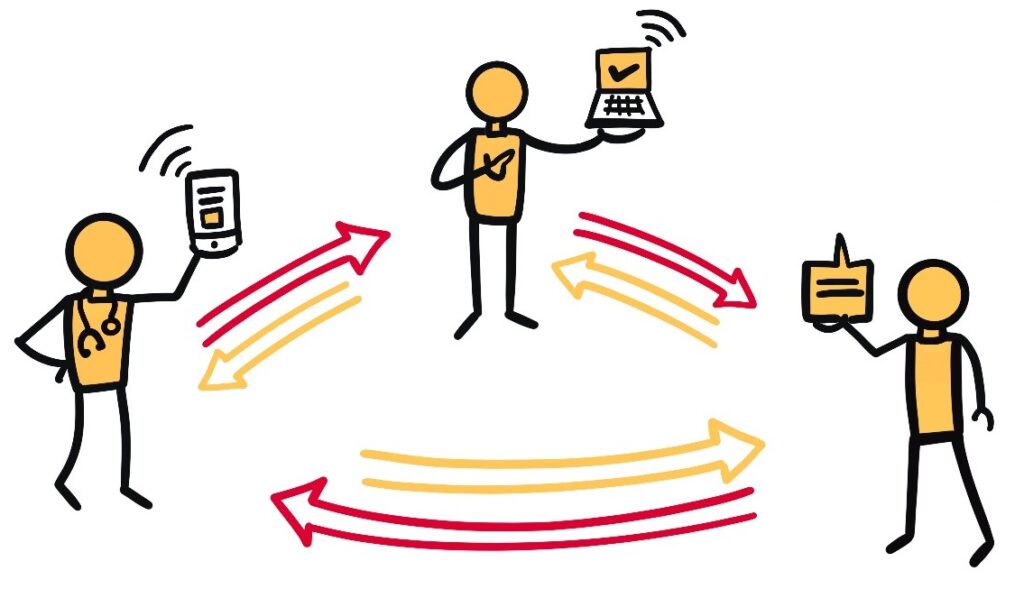
- Professional and peer leadership play a key role in driving change and encouraging clinician engagement. Having trusted voices help build momentum for change can make it much easier to engage clinicians.
- Champions of change drawn from frontline clinicians can be real assets – they can advocate for new technologies, share positive, real-world experiences, and help their peers see how an intervention actually works in practice. This kind of peer-to-peer influence can support smoother transitions and higher staff engagement.
- This said, just naming “champions” is not enough. To have real impact, champions must be meaningfully integrated into communication, training activities, and evaluation processes.
- It’s important to identify and support peer leaders who are respected, representative, see the potential of new tools, and are able to share this with colleagues. Involving them early in testing, training, and ongoing feedback can help build ownership and credibility from the start.
- Encouraging champions to share their own personal experiences, demonstrate real use cases, and act as approachable points of contact, can help make change interventions less daunting.
- Change champions need support, too. Regular check-ins and access to updates will ensure they stay informed and motivated. If champions feel supported, they will be in a better position to support the team around them.
Communication and feedback
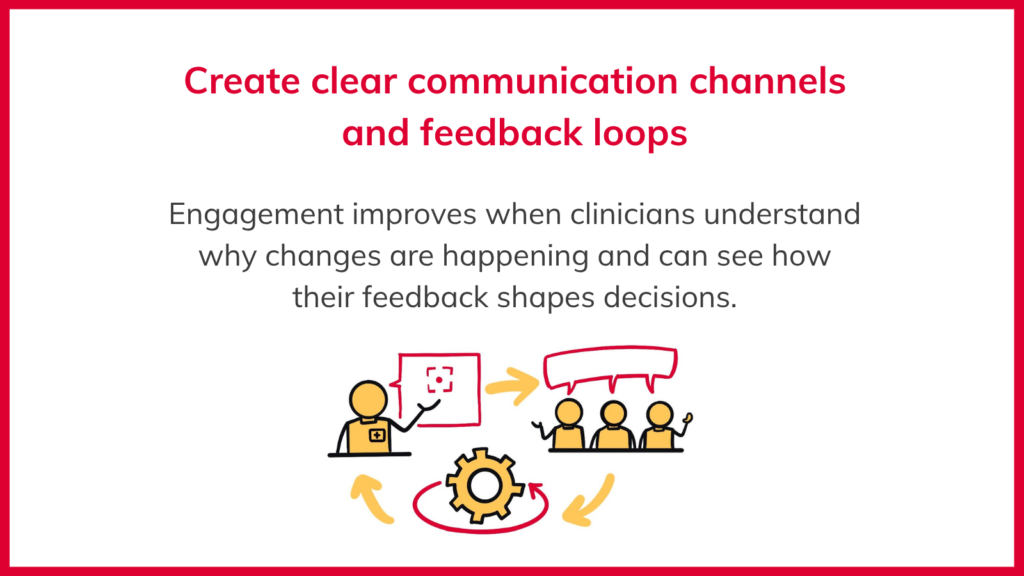
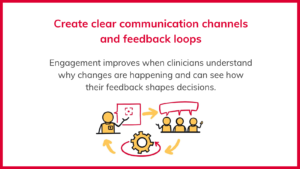
Create clear communication channels and feedback loops
Clinicians are more likely to engage with new technologies and innovations when they understand why they are being introduced, are listened to in their concerns and questions, and can see how their feedback influences the rollout.
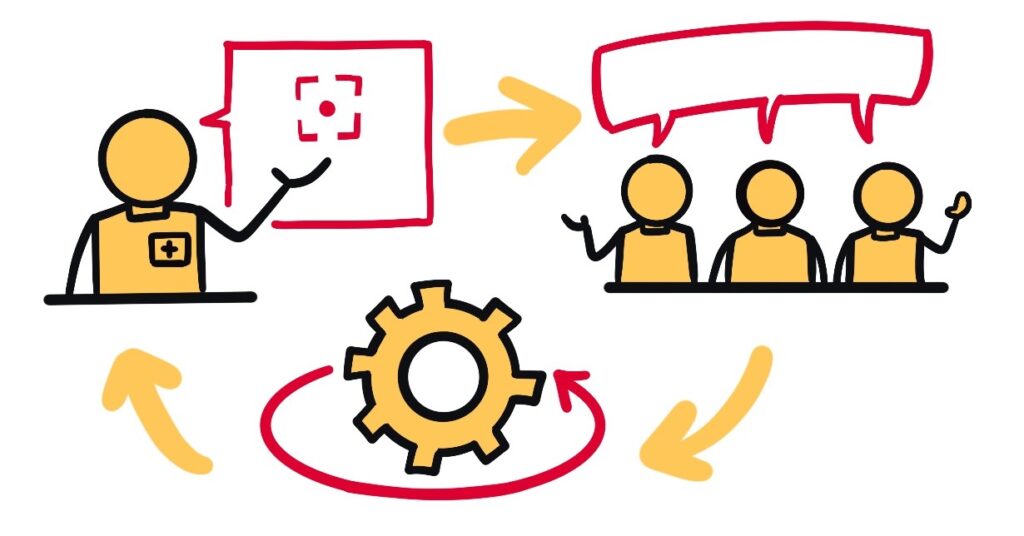
- Clearly communicate the rationale behind the introduction. What’s in it for staff? How will patients benefit? What does it bring to the organisation? Change champions can help communicate these benefits. But acknowledgment that not everything will be perfect straight away helps too. This kind of honesty will help ensure people don’t feel misled, but will also reassure them that if any issues do arise, their concerns will be heard.
- Transparency is key. Be open about how clinician feedback is being addressed, including timelines, expectations, and any potential challenges.
- Establish regular, open feedback loops to show that this process is not simply symbolic. For example, share visible action plans showing how feedback is being addressed. When certain suggestions can’t be implemented, explain why this is the case. People are more likely to be accepting when they understand reasoning.
- There is no one-size-fits-all rule. Use multiple communication channels (team huddles, newsletters, digital updates, posters) to reach staff in the ways that work best for them. And don’t assume everyone reads their emails (as we all know).
- Give examples of how clinician input has meaningfully shaped decisions. When people see their ideas implemented in practice, this can increase trust and strengthen engagement, as the intervention will be recognised as one they are helping to build.
Day-to-day integration
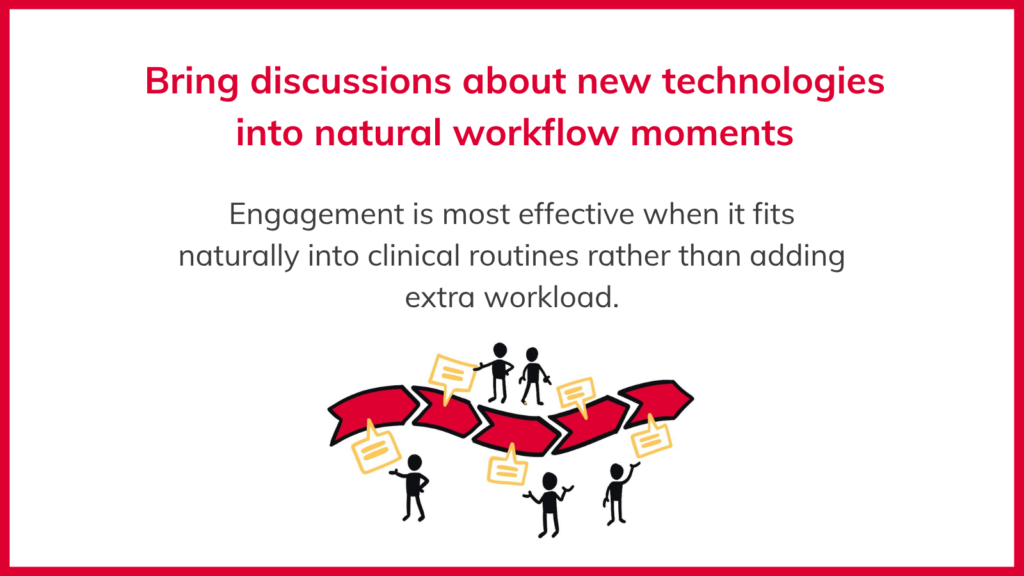
Discuss new technologies during natural workflow moments
Engagement is most effective when it fits naturally into clinical routines rather than adding extra workload. If work system re-design is going to be needed, it’s important to plan for that and support people to do it.

- Bring discussions into natural workflow moments. Think shift huddles, handovers, and on‑ward demonstrations – places where teams are already talking and learning together. This is often more effective than long emails or additional meetings.
- Line managers can play a crucial role. If they are given the right tools, information and resources, they can support day-to-day team engagement and help integrate new technologies into workflows.
- Brief, regular, in‑person touchpoints (e.g. meetings and shift huddles) to answer questions, address concerns, and provide updates will maintain visibility of the rollout.
- Be clear about what can be changed or adapted by clinicians themselves and how this can be done. Increased understanding of how clinicians can adapt any new interventions to work for them in their day-to-day practice is more likely to result in positive engagement.
Recognition
Recognise the time and effort clinicians contribute
Acknowledging time and effort can help sustain motivation and long-term engagement. When people know their contribution is valued, they are more likely to stay invested.

- Ensure that the time clinicians spend learning or testing counts as working time, rather than extra work on top of already busy schedules. This emphasises the change programme as valuable and meaningful work, and shows respect for clinicians’ time.
- Recognition for engagement can take many forms, and small gestures can make a big impact. For example, certificates for training and shout‑outs in newsletters or team meetings can help make clinicians know they are valued.
- Consider awarding Continuing Professional Development (CPD) points for training sessions.
Share progress
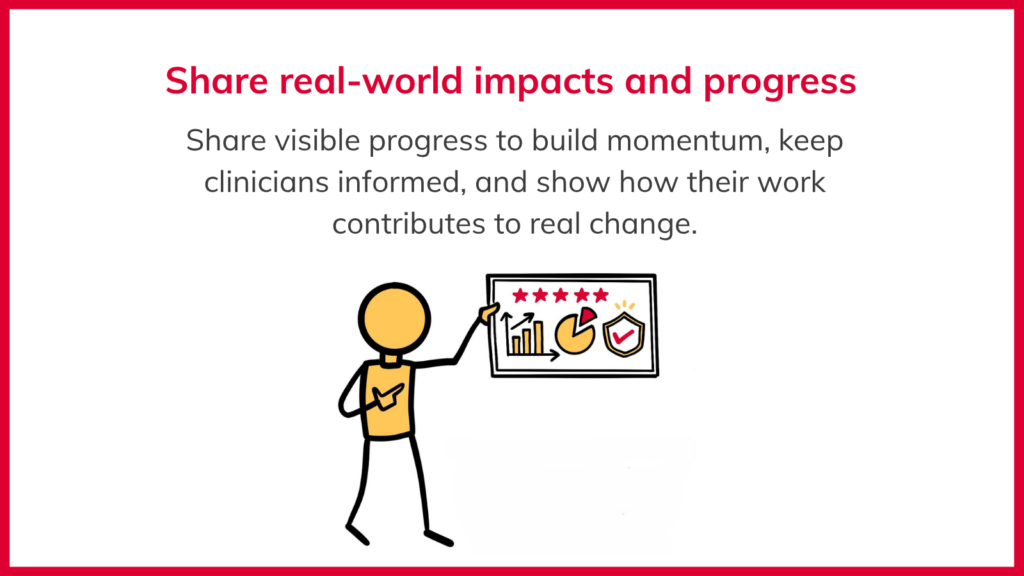
Share real-world impacts and progress
Visible wins help build momentum, keep clinicians in the loop, and remind them that their efforts are contributing to real change.

- Regularly share real‑world impacts, such as improvements in workflow efficiency, patient experience, clinical well‑being, or cost savings. If people can see tangible outcomes, they are more likely to actively engage with the change programme.
- Use stories, case studies, dashboards, and before‑and‑after examples to help bring progress to life in ways that are relatable to day-to-day workflows.
- Share pitfalls and challenges and discuss with clinicians how they can be addressed and improved moving forward.
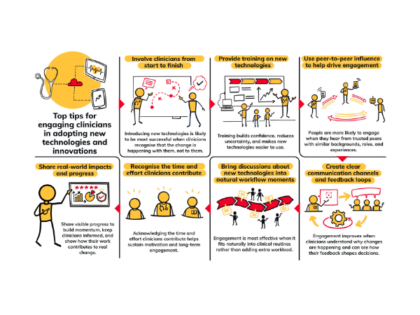
Seven top tips for engaging clinicians in adopting new technologies and innovations
Seven top tips for engaging clinicians in adopting new technologies and innovations – text-only version
- Involve clinicians from start to finish: Introducing new technologies is likely to be most successful when clinicians recognise that the change is happening with them, not to them.
- Provide training on new technologies: Training builds confidence, reduces uncertainty, and makes new technologies easier to use.
- Use peer-to-peer influence to help drive engagement: People are more likely to engage when they hear from trusted peers with similar backgrounds, roles, and experiences.
- Create clear communication channels and feedback loops: Engagement improves when clinicians understand why changes are happening and can see how their feedback shapes decisions.
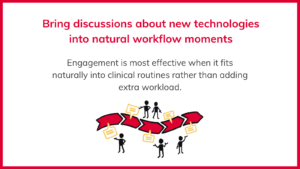
- Bring discussions about new technologies into natural workflow moments: Engagement is most effective when it fits naturally into clinical routines rather than adding extra workload.
- Recognise the time and effort clinicians contribute: Acknowledging the time and effort clinicians contribute helps sustain motivation and long-term engagement.
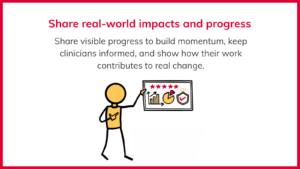
- Share real-world impacts and progress: Share visible progress to build momentum, keep clinicians informed, and show how their work contributes to real change.
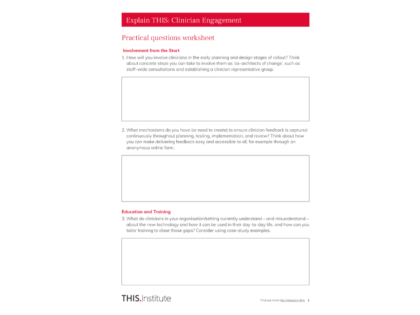
Practical questions
Involvement from the start
- How will you involve clinicians in the early planning and design stages of rollout.
Think about concrete steps you can take to involve them as ‘co-architects of change’, such as staff-wide consultations and establishing a clinician representative group. - What mechanisms can you use to ensure clinician feedback is captured throughout planning, testing, implementation, and review?
Think about how you can make giving feedback easy and accessible to all, for example through an anonymous online form.
Education and training
- What do clinicians in your setting currently understand – and misunderstand – about an innovation or technology and how it can be used in their day-to-day life, and how can you tailor training to close those gaps?
Consider using real-world settings and case study examples. - Which training formats (e.g. short videos, on‑ward demonstrations, peer‑led sessions) are most realistic for your clinicians’ schedules, and how can you make them easy to access?
- How will you ensure ongoing training and refreshers are built into normal workflows rather than treated as one‑off events? For example, could automated reminders and ongoing updates in staff bulletins have a role?
Change champions
- Who are the trusted voices in your setting who could serve as credible champions? How will you select them fairly and transparently?
- How will you integrate change champions meaningfully into communication, training, and feedback processes rather than treating the role as tokenistic?
Communication and feedback loops
- How will you communicate the rationale for introducing the new technology or innovation – including benefits, limitations, and uncertainties – in a way that feels honest and trustworthy?
Consider asking change champions to help. - What communication channels actually reach clinicians in your organisation, and how can you diversify them to avoid over‑reliance on email?
For example, consider team huddles, lunchtime discussions, and display posters. - How will you show clinicians that their feedback is being addressed and is shaping decisions, including when suggestions cannot be implemented?
For example, consider regular ‘you said, we did’ email updates.
Day‑to‑day integration
- What natural workflow moments can you use to embed discussions without adding extra meetings or emails?
Consider in-person touchpoints, such as handovers, huddles, ward rounds and line manager meetings. - How can you support clinicians in adapting the new technology to meet their individual needs?
Recognition
- How will you recognise and place value on the time clinicians spend learning and testing new technologies so that engagement feels meaningful rather than burdensome?
Share progress
- How will you share tangible impacts and progress with clinicians in a way that encourages them to continue engaging? Consider using case studies and testimonials to highlight the direct positive impact of the innovation.
Further reading
The Health Foundation
The spread challenge
https://www.health.org.uk/reports-and-analysis/reports/the-spread-challenge
Deloitte Center for Health Solutions
Clinician engagement is key to driving effective cost and tech change at health systems
https://www.deloitte.com/us/en/insights/industry/health-care/clinician-buy-in-system-shifts.html
Alessandro Galazzi, Federico Fonda, et al.
Recommendations to promote the digital healthcare transformation in the clinical practice: findings from an international consensus development method
https://doi.org/10.1186/s12913-025-13079-9
Lee Schwamm, Sarah Pletcher, and Alistair Erskine
AI and Technology Enabled Clinical Workflow Redesign
https://doi.org/10.1089/tmr.2024.0079
Samantha Robertson, Ingrid Rosbergen, et al.
Addressing complexity when developing an education program for the implementation of a stroke Electronic Medical Record (EMR) enhancement
https://doi.org/10.1186/s12913-023-10314-z
Katie Wood, Vicki Giannopoulos, et al.
The role of clinical champions in facilitating the use of evidence-based practice in drug and alcohol and mental health settings: A systematic review
https://doi.org/10.1177/26334895209590
Alexandra Morena, Larissa Gaias, and Celine Larkin
Understanding the Role of Clinical Champions and Their Impact on Clinician Behavior Change: The Need for Causal Pathway Mechanisms
https://doi.org/10.3389/frhs.2022.896885
Ian Scott, Kathrin Cresswell, Robin Williams, and Anton van der Vegt
How can we promote greater adoption of AI in healthcare?
https://doi.org/10.1136/bmjqs-2025-019405 (Paywall)
Carol Cain, Anna Davis, et al.
Quality Assurance during the Rapid Implementation of an AI-Assisted Clinical Documentation Support Tool
https://ai.nejm.org/doi/full/10.1056/AIcs2400977 (Paywall)
Acknowledgements
This resource was written by Dr. Abbie Greig. Thank you to Dr. Zoë Fritz and Dr. Carol Sinnott for their insightful comments and recommendations.